Hall strategy at the Bombay Exhibition Centre: where serious buyers actually work
Material Handling Expo Mumbai 2026 is positioned as India’s premier procurement-grade warehousing and intralogistics trade fair for warehouse operations, automation and logistics transportation leaders. For a procurement, operations or IT director flying into Mumbai, the difference between a productive visit and a wasted budget line will be decided by how you move through the Bombay Exhibition Centre halls. With more than 180–200 exhibitors typically spread across roughly 9,000–10,000 square metres at the venue (based on recent organiser statistics published in past exhibitor brochures and visitor summaries), you cannot afford to treat this as a casual walk through a generic handling expo.
The organiser, Future Market Events Pvt. Ltd., usually concentrates automation, warehouse automation and intralogistics warehousing solutions in the central halls closest to the main entrance of the centre, such as Halls 1 and 2. That is where handling equipment OEMs, storage systems specialists and cutting-edge warehouse automation platforms cluster, and where decision makers from automotive, FMCG and e-commerce supply chain teams usually spend their prime hours. In contrast, the outer aisles and peripheral zones of the exhibition often tilt toward regional handling resellers and small distributors of basic material handling trolleys and pallet trucks that rarely meet national framework contract requirements.
For enterprise buyers, the smart route through Expo Mumbai is simple but disciplined. On day one, enter via the main gate, walk directly to Hall 1 and Hall 2, and block your early slots with three to five shortlisted exhibitors such as established conveyor OEMs, AS/RS providers and racking manufacturers. Use the official Bombay Exhibition Centre floorplan and exhibitor directory for Material Handling Expo Mumbai 2026, available from the organiser’s visitor guide, pre-event emailers and onsite registration counters, to mark these stands in advance and to cross-check hall allocations. Only later in the afternoon should you sample adjacent warehousing and storage systems booths for price benchmarking and alternative configurations. Treat the more generic handling expo sections in the outer halls as overflow time, not as the core of your day, because the highest-ROI conversations on future material flows, integrated supply chain design and long-term warehouse automation strategy will sit inside the automation-heavy cluster.
From five meetings to thirty: building a procurement route map across overlapping events
Most professionals arrive at Material Handling Expo Mumbai 2026 with a vague list of brands and leave with only five half-useful conversations logged in their CRM. The teams that walk out with twenty to thirty qualified meetings and a reshaped supply chain shortlist treat the event as a three-phase project, not a three-day outing. They lock targets before they land in Mumbai, they exploit the overlap with INDEXPO at the same venue, and they script follow-ups while the exhibition is still running.
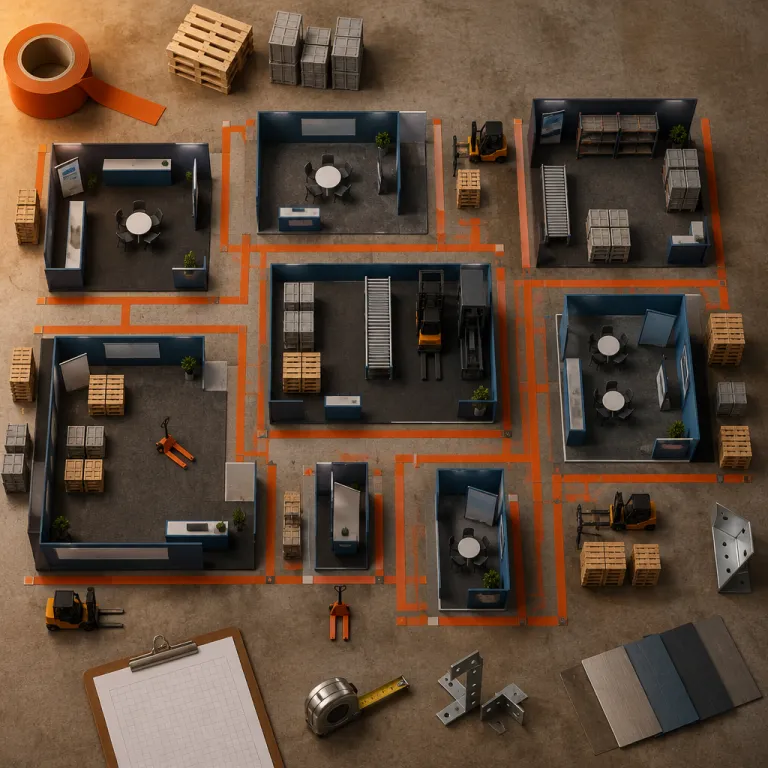
Start with a one-page route map that links your warehouse, logistics and intralogistics warehousing priorities to specific halls and stands at the Bombay Exhibition Centre. For example, colour-code Hall 1 for conveyor systems, AS/RS storage systems and robotics integrators, Hall 2 for warehouse automation software, IoT monitoring and logistics transportation platforms, and Hall 3 for generic material and handling equipment suppliers. Next to each colour block, list two or three target exhibitors and a single question you must answer with them, such as “What throughput per square metre can your shuttle system guarantee?” or “How does your WMS integrate with our existing ERP?” This simple visual forces you to spend at least 70 percent of your time where long-term supply chain value is created rather than in low-impact corners of the event.
To make this route map usable on the ground, convert it into a short checklist you can carry on your phone or print with the official floorplan for warehouse automation India 2026 visitors:
- Confirm hall-wise priorities using the latest organiser floorplan and exhibitor list for Material Handling Expo Mumbai 2026.
- Block 10–12 meeting slots across Hall 1 and Hall 2 for automation, storage systems and intralogistics warehousing platforms.
- Tag 3–4 backup exhibitors per category for quick comparisons on throughput, integration and lifecycle cost.
- Reserve one pass through Hall 3 and the outer aisles purely for benchmarking generic material handling equipment.
- Note one follow-up action per meeting (demo, site visit, commercial proposal or technical workshop) before you leave the stand.
The overlap with INDEXPO in May at Bombay Exhibition Centre is not a scheduling nuisance; it is a chance to coordinate decisions across functions. Procurement leaders can sit with engineering and maintenance colleagues to split time between the handling expo and the industrial machinery halls next door, creating a joint view of material specifications, lifecycle costs and integration constraints. A practical schedule might reserve mornings in Hall 1 and Hall 2 for automation and storage systems demos, then allocate late afternoons to INDEXPO for checking compatibility of forklifts, dock equipment or industrial components. For readers tracking how cross-vertical expos reshape collaboration in India, this pattern mirrors the playbook used at leading energy and manufacturing shows, where joint visits by supply chain, engineering and sustainability teams have shortened evaluation cycles and improved contract quality for logistics and warehouse-centric buying.
Seven day follow up discipline and the sustainability lens on warehouse decisions
The real value of Material Handling Expo Mumbai 2026 is unlocked in the week after the event, not on the exhibition floor. A simple seven-day template works consistently for senior buyers who manage multi-stakeholder approvals across finance, operations and IT in large organisations in India. Day one and two are for cleaning your notes, tagging each warehouse or material handling vendor by use case and risk level, and logging every interaction with exhibitors into your CRM with clear next steps and agreed data requests.
Day three and four are for structured comparison of solutions across automation, storage systems and logistics transportation offers, using hard metrics such as throughput per square metre, energy consumption and projected payback period. This is where properly documented case studies matter. For example, a 2023 logistics automation report by a leading India warehousing and logistics industry association cites a warehouse that implemented automated conveyor and sortation systems and achieved roughly a 30 percent increase in handling efficiency and around a 20 percent reduction in operating costs over two years, once process redesign and staff training were completed. Use this kind of benchmark, ideally sourced from the original PDF report or case study shared by the association or by the organiser in its knowledge resources, to challenge vendor claims and to build realistic business cases for warehouse automation in your own network.
Day five to seven should be used to schedule technical deep dives with two or three shortlisted partners, align internal stakeholders on preferred options, and close the loop with all other professionals you met so that your reputation as a serious buyer remains intact for future events. Across these steps, sustainability and regulatory pressure on supply chain emissions are no longer optional filters for any industry. The sessions on eco-efficient material handling, energy-optimised AS/RS and IoT-enabled monitoring at the exhibition align closely with the practices described in the organiser’s material on sustainable expos and in independent analyses of how sustainability events are reshaping B2B business leadership in India, which many logistics leaders now treat as a reference point. For a procurement director in Mumbai or any other logistics hub in India, the test is whether your final shortlist from this warehousing expo reflects not just the latest trends in automation and intralogistics warehousing, but a credible path to lower energy use, safer handling processes and, ultimately, not booth traffic, but qualified pipeline and measurable supply chain performance.